Tampa attic crawlspace sanitation cost factors depend heavily on square footage, access limitations, and contamination density. In historic bungalow properties throughout Seminole Heights and Tampa Heights, tight…
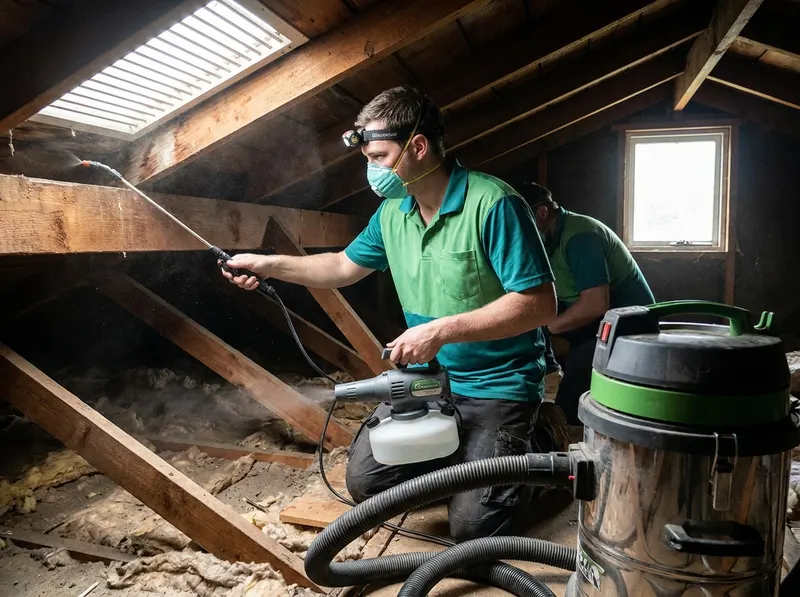
Tampa attic crawlspace sanitation cost factors depend heavily on square footage, access limitations, and contamination density. In historic bungalow properties throughout Seminole Heights and Tampa Heights, tight pier-and-beam crawlspaces measure under 24 inches of vertical clearance, requiring specialized containment protocols. A targeted cleanout of an isolated HVAC duct leak or entry zone begins at the $150 minimum service fee. Full remediation of a 1,500-square-foot attic with soiled loose-fill cellulose ranges between $1,800 and $3,500. Exact figures are confirmed on-site during inspection, because substrate moisture levels and duct work integrity alter the necessary dwell time for hospital-grade disinfectants.
Microbial decontamination protocols adhere strictly to technical guidelines established by the U.S. Environmental Protection Agency for indoor biocide applications. Technicians utilize negative air machines equipped with verified NIOSH-rated HEPA filtration systems to capture microscopic particulate matter before it migrates downward into primary living quarters. In older 1920s structures across Hyde Park and Ybor City, rodent nesting material and German roach frass frequently accumulate in floor joists directly above dining and sleeping areas. Containment barriers prevent cross-contamination while technicians clear biologically active matter under guidelines detailed by the Occupational Safety and Health Administration.
Insulation replacement and thermal performance restoration require balancing structural hygiene with energy efficiency. Subtropical humidity along Hillsborough River State Park and Curtis Hixon Waterfront Park accelerates fungal growth on urine-saturated fiberglass batts. Removing wet materials aligns with moisture abatement principles outlined by the U.S. Department of Energy to prevent hidden structural rot. After biological waste extraction, surfaces receive an application of botanical or broad-spectrum antimicrobial agents registered with the Florida Department of Agriculture and Consumer Services. Properties in coastal zones such as Davis Islands, Ballast Point, and Palma Ceia benefit from immediate pathogen knockdown, which halts insect attraction pheromones without releasing volatile organic compounds into pet and child living spaces.
Structural entry sealing and wildlife exclusion prevent reinvasion after the decontamination process concludes. Technicians verify roof returns, soffits, and crawlspace vent grates across suburban homes in Westchase, Carrollwood, and New Tampa. The remediation protocol operates in three sequential phases: 1. Controlled removal of bio-waste under containment. 2. Mechanical HEPA vacuuming of joists and floorboards. 3. Fine-particle biocide atomization for full envelope sanitization. To clarify scope, sanitation decontaminates microbial hazards and removes soiled substrates; it does not replace structural carpentry or repair rotted subfloors. Property owners can discuss specific architectural dimensions directly by contacting DirectCare Pest Solutions at (689) 268-7849.
Every job gets a firm, written price after a free on-site visit.
For standards, safe disposal, and service guidance on PEST CONTROL SEVICE in Tampa, FL, useful references include U.S. EPA, ENERGY STAR, U.S. Dept. of Energy, Consumer.gov, U.S. Census Bureau, and Google Maps. General consumer and small-business resources are available from USA.gov, Better Business Bureau, FTC Consumer Advice, U.S. Small Business Administration, and Ready.gov.
Tell us about your attic crawlspace sanitation and decontamination job in Tampa and we'll send a clear, written quote, usually the same day.
 DirectCare Pest Solutions